


Explainability before automation
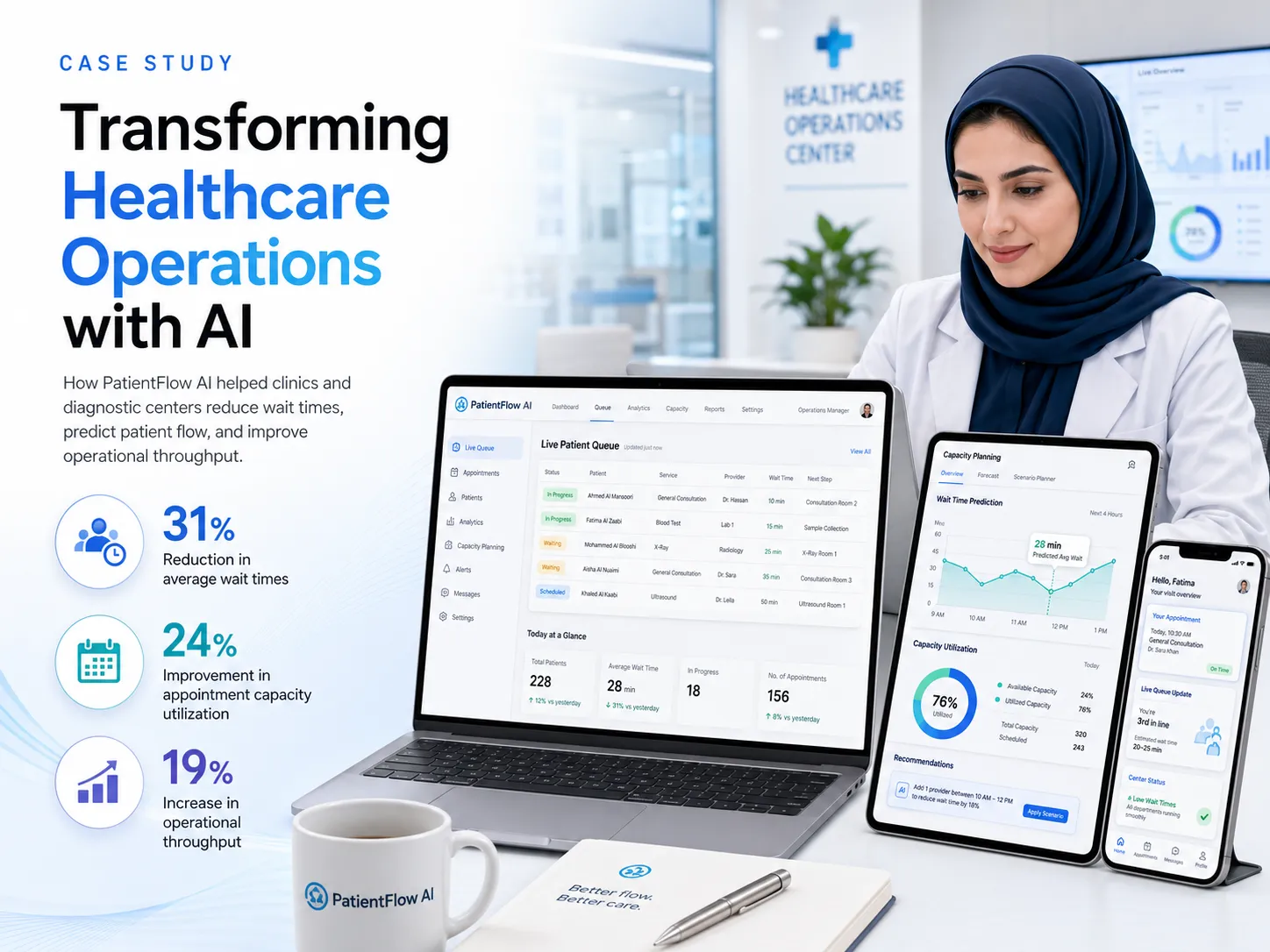
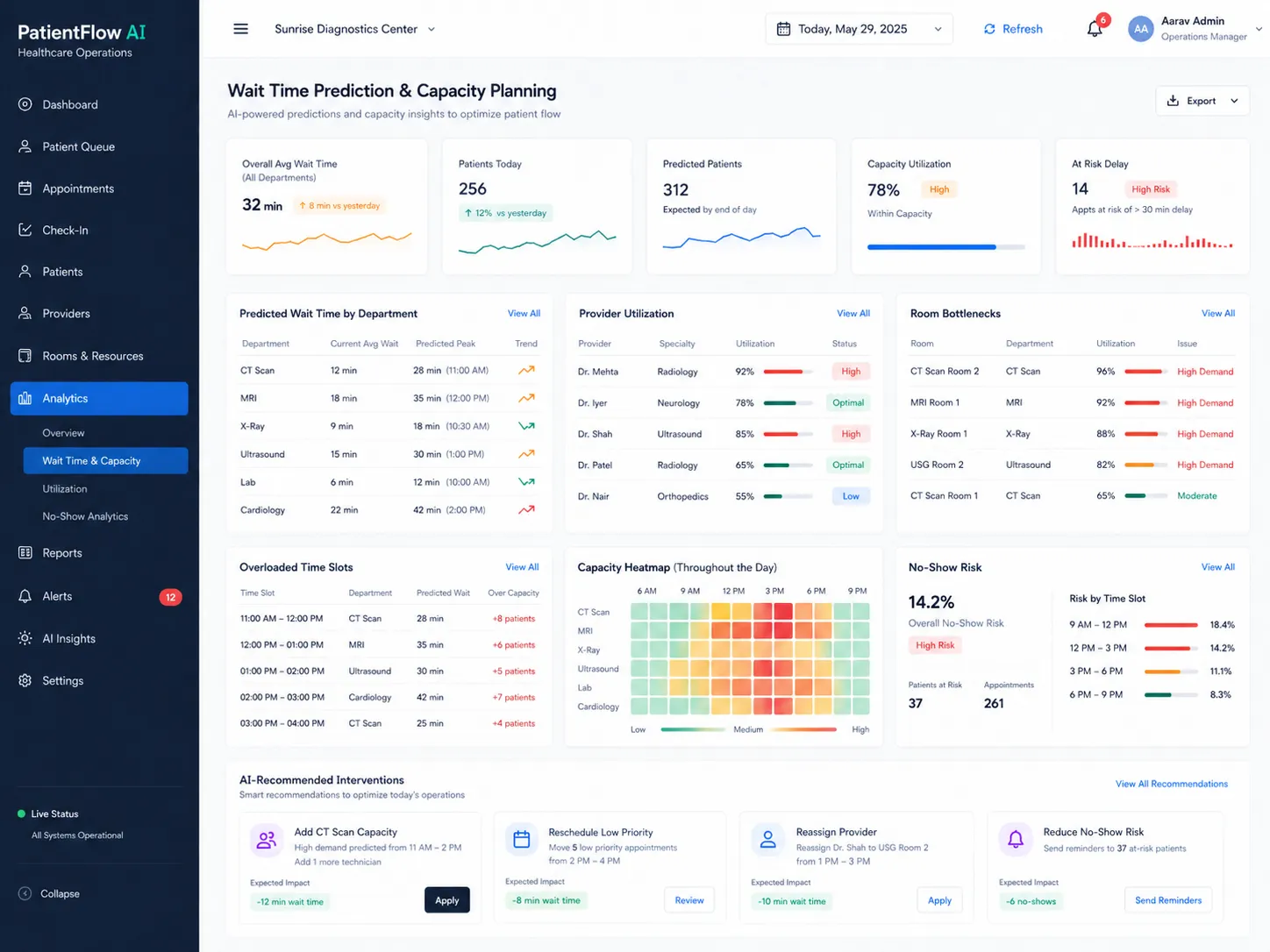
Healthcare teams need to understand why a queue is being flagged or why a delay is predicted. We designed the platform so delay predictions show practical reasons such as provider overrun, room pressure, late arrivals, no-show patterns, or appointment-type duration variance. The goal is not to show a mysterious score. The goal is to help teams act.
Human-in-the-loop operations
The platform recommends actions, but healthcare teams remain in control. AI can suggest queue adjustments, patient updates, escalation actions, or capacity changes, but staff can review and approve actions before they affect patients. This keeps automation useful without removing operational judgment.
Role-based interfaces for healthcare teams
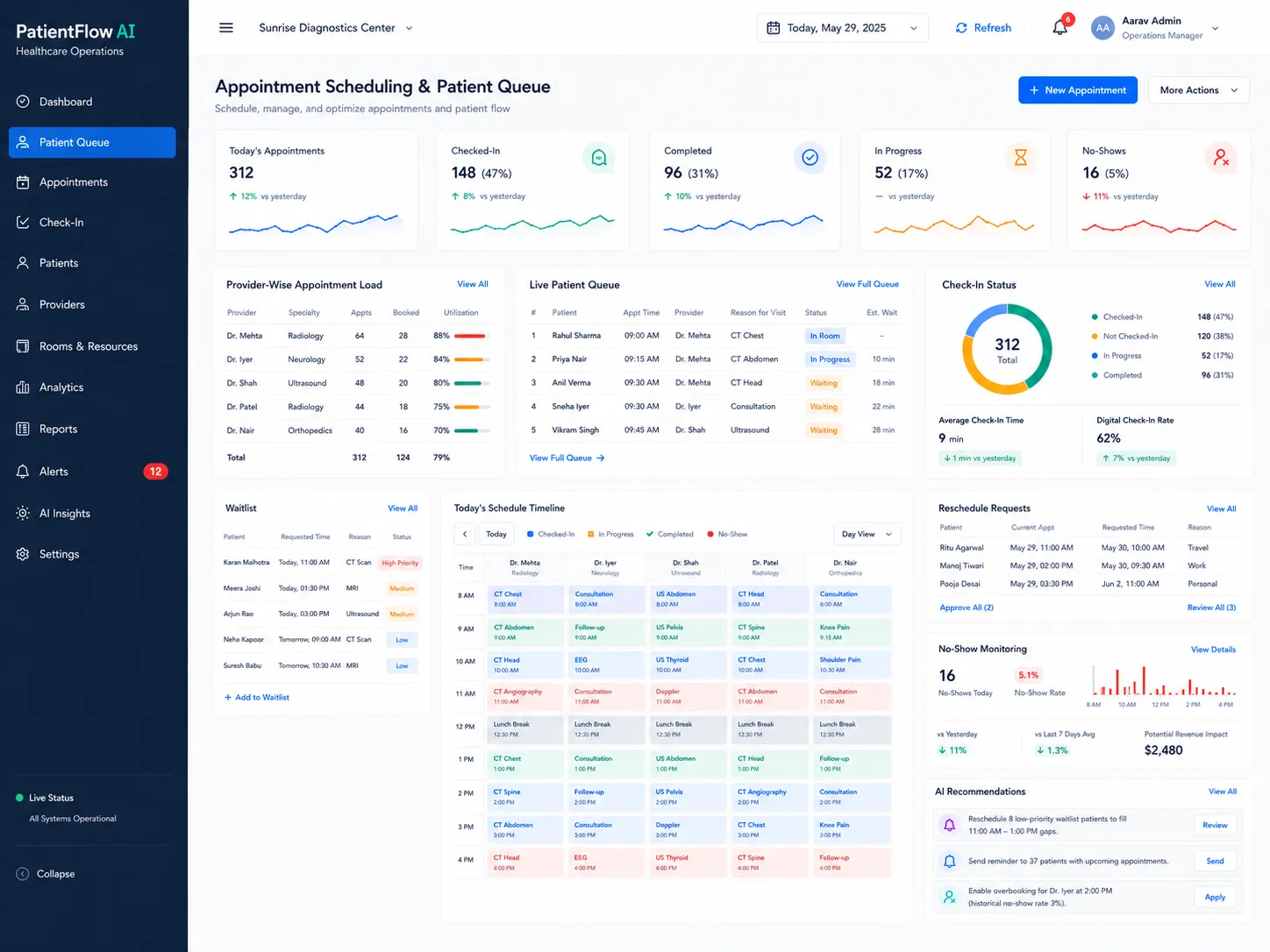
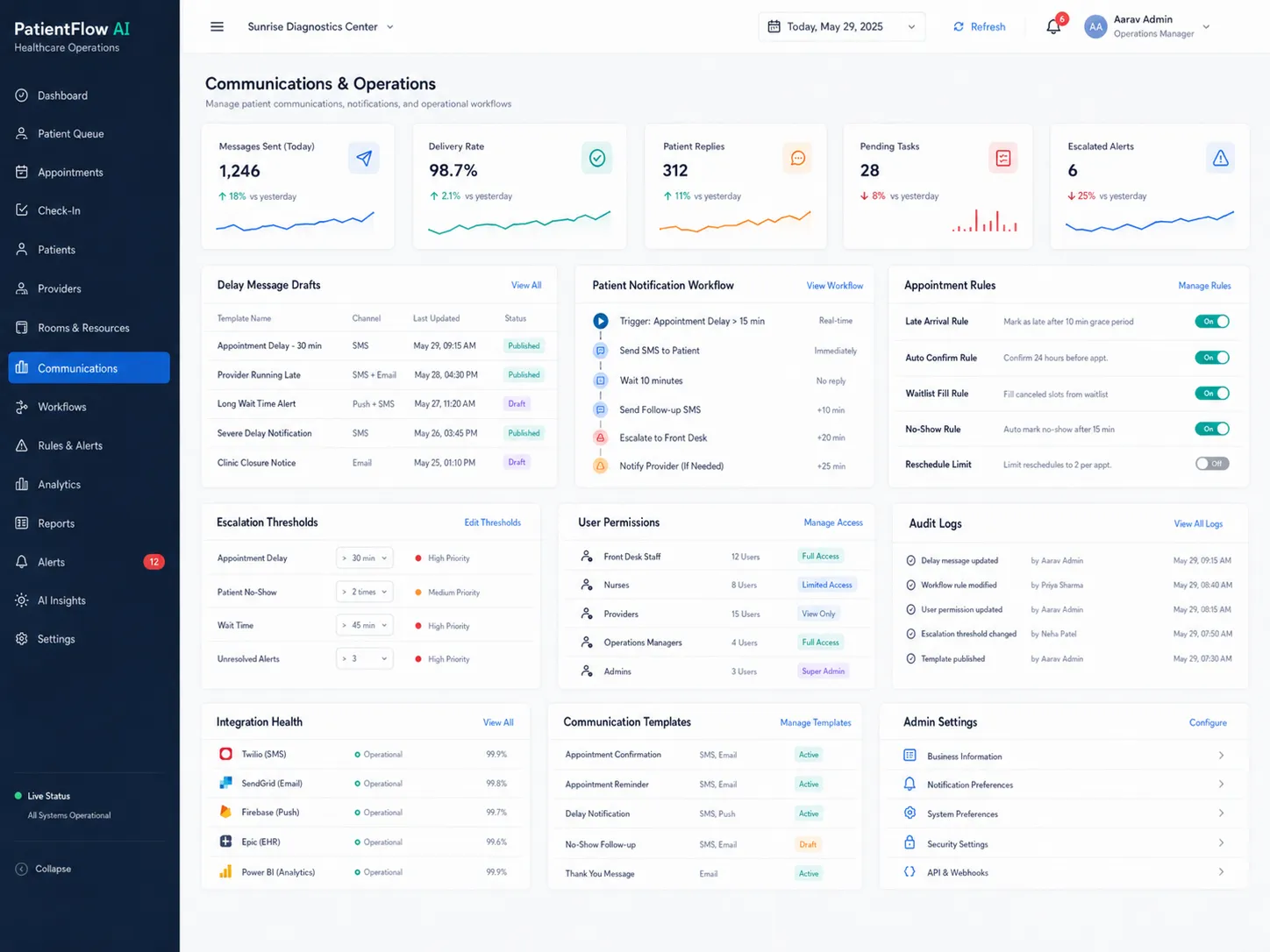
A front-desk user, provider, care coordinator, operations manager, and administrator do not need the same screen. We designed distinct control surfaces for each role. Reception teams see queues and patient readiness. Providers see visit flow and delays. Managers see utilization, bottlenecks, and capacity pressure. Admins see rules, permissions, logs, and configuration.
Privacy-aware architecture and secure workflow design
Healthcare operations data can be sensitive. We designed the platform around role-based access, audit trails, secure integrations, data minimization, and controlled workflow actions. The system was built for secure daily usage with event-driven updates, queue processing, monitoring, access controls, and privacy-aware design built in from the start.