
Digital transformation background

Industrial manufacturing software development company

The engineering backbone of modern industrial manufacturing operations
We design, build, and scale industrial software for manufacturers that cannot afford downtime, blind spots, or fragmented operations. From shop-floor execution and production tracking to AI-powered quality intelligence, maintenance workflows, and factory analytics, we deliver manufacturing systems built for reliability, usability, and long-term operational value.

13+

years building business-critical software

97%

average partner satisfaction rate

7+ years

average client relationship length

ERP / MES / IIoT / AI

connected manufacturing systems
Role-based
AI-enabled

Trusted by industrial teams building the next generation of manufacturing operations

For years, we’ve been helping industrial and manufacturing businesses modernize operations, unify disconnected systems, and turn factory data into practical software used by real teams every day.
Company logo
Company logo
Company logo
Company logo

Why choose AblyCode for industrial manufacturing software development

Local product ownership, hands-on execution, and practical industrial software built around operational realities — these are the core reasons manufacturers choose to work with us.

Business-first software for real factory workflows

We do not design software in isolation from operations. We begin with the way your plant, teams, and production flow actually work — then build systems that support planners, supervisors, operators, quality teams, and leadership in the moments that matter.
class=

Their team quickly understood that our biggest challenge was not lack of data, but lack of connected visibility across production, downtime, and quality. AblyCode translated that operational complexity into a system our teams could actually use on the floor.

Faster operational visibility, less manual coordination

We replace spreadsheet chasing, verbal updates, and fragmented reports with connected digital workflows that surface order status, machine conditions, bottlenecks, disruption causes, and quality risks in one place.
 class=

The biggest improvement was visibility. Teams no longer needed to ask five people to understand what was happening in production. The system made bottlenecks and priorities visible immediately.

Hands-on product and workflow thinking

We do not just build isolated screens. We design systems around execution flows: production planning, shift operations, inspection routing, downtime logging, machine status, maintenance escalation, and AI-assisted decision support.
class=

AblyCode's ownership is a significant factor in our project's success. They take charge of every detail and consistently exceed expectations with their dedication.

High quality at competitive cost

We combine strong product ownership and architecture discipline with efficient engineering delivery. That allows industrial companies to modernize operations without the cost and friction usually associated with large digital transformation programs.
 class=

They brought the right balance of speed, quality, and flexibility. We could move forward without sacrificing the rigor needed for a production-critical system.

AI expertise with business value in focus

We apply AI where it creates real operational leverage: production risk detection, downtime intelligence, anomaly spotting, inspection prioritization, shift summaries, and supervisor decision support. We do not push AI for its own sake.
class=

It feels like they’re part of our team. AblyCode thinks about improvements and comes up with solutions.

Built for reliability, scale, and operational continuity

Manufacturing systems must work in real conditions: plant-floor interruptions, role-based usage, legacy integrations, variable data quality, and changing production priorities. We design software that respects those realities from day one.
 class=

AblyCode approached the project with strong ownership and an unusually practical mindset. They focused on what would actually help the factory operate better, not just what looked good in a demo.

Proven expertise across key industrial manufacturing use cases

We build manufacturing software for companies operating under production pressure, delivery commitments, machine constraints, and strict quality expectations.

Production tracking and shop-floor execution

Software that helps operators, supervisors, and planners track order progress, stage movement, delays, and work completion in real time.
Work order tracking
Stage-level production visibility
Operator task screens
Shift summaries and handover views

Planning and scheduling systems

Systems that help planners understand execution drift, rebalance priorities, and improve schedule predictability.
Production planning dashboards
Queue and backlog monitoring
Due-date risk visibility
Capacity-aware planning support

Quality and inspection intelligence

Digital workflows and analytics for inspection teams, quality managers, and production leaders.
Inspection hold tracking
Rework visibility
Defect trend dashboards
Quality anomaly detection

Downtime and maintenance workflows

Software that helps teams log, classify, analyze, and act on disruption and machine issues more effectively.
Downtime capture and reason logging
Machine issue tracking
Maintenance escalation workflows
Recurring failure analysis

Industrial AI and operational decision support

AI-powered capabilities that help manufacturing teams identify issues earlier and make better operational decisions faster.
Delay prediction
Bottleneck detection
Downtime intelligence
Quality risk signals

Manufacturing analytics and reporting

Unified analytics layers that connect operations, machine events, quality, and planning for leadership and continuous improvement.
Plant performance dashboards
Throughput and utilization analytics
Order completion analysis
Line and stage comparison views
Call to action background

Get a free estimate for your manufacturing software project

Book a free 30-minute call with our product team and get an initial recommendation on scope, roadmap, and delivery approach.

Our industrial manufacturing software development methodology

How we build software for operationally demanding manufacturing environments

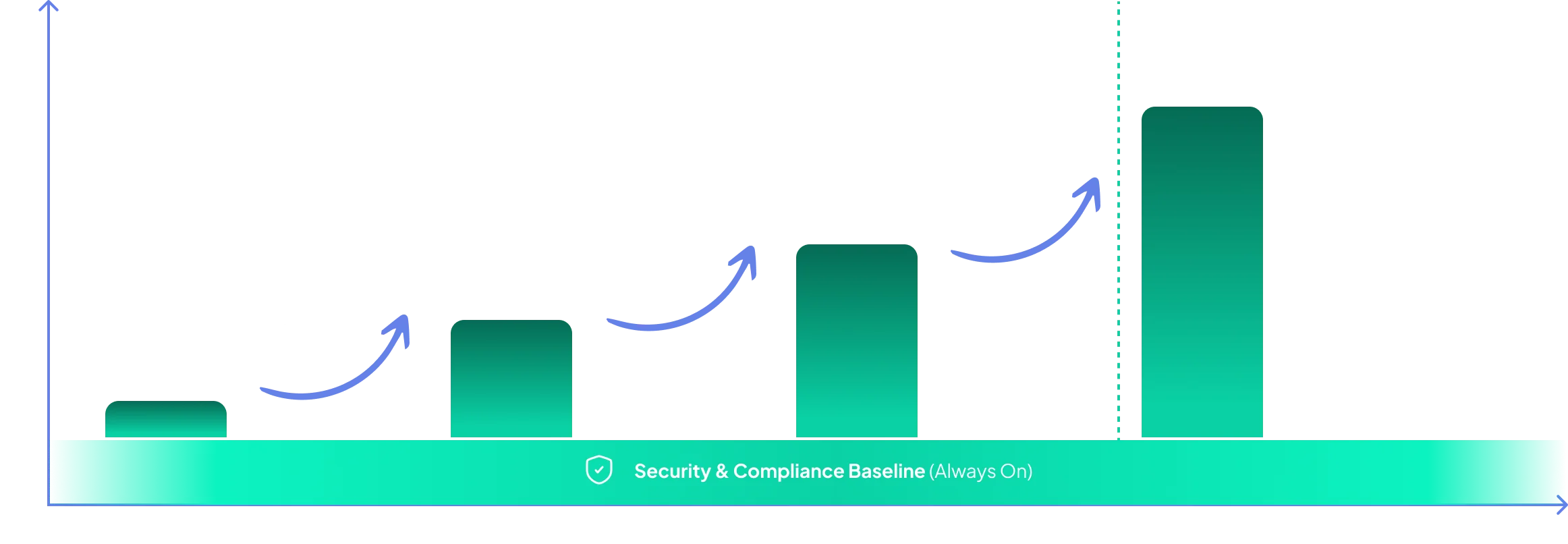
Our methodology is designed for factories and industrial businesses where operational continuity matters. That means workflow understanding, integration constraints, usability, and reliability are addressed upfront — not treated as cleanup after launch.
Full-cycle development methodology diagram
Phase 1

Alignment

We begin by understanding the plant reality: workflows, people, bottlenecks, systems, and decisions.

Production process and role mapping
Current system and data flow assessment
Machine / ERP / MES / quality integration review
Bottleneck and pain-point identification
Phase 2

Design

We design workflows and interfaces that support actual plant usage, from desktop control views to supervisor workspaces and operator-friendly execution screens.

Role-based workflow design
UI/UX for planners, supervisors, operators, quality teams, and admins
Dashboard and action-flow prototypes
Scalable design system for industrial software
Phase 3

Development

We build secure, reliable software that handles live operations, integrations, and business-critical workflows.

Backend architecture and workflow orchestration
ERP / MES / telemetry / quality integrations
Role-based permissions and operational logging
Automated testing and infrastructure standards
Phase 4

Maintenance and growth

After launch, we help the system remain stable, useful, and ready for broader operational impact.

Monitoring and issue response
Workflow refinements based on real usage
Integration upkeep
New module expansion

Choose a collaboration model

Depending on how you want to work, we either take full ownership of delivery or provide a dedicated industrial software team that integrates with yours.

End-to-end development

We take full ownership of your manufacturing software initiative — from discovery and workflow design to engineering, rollout, and post-launch improvement. This model works well for companies that want a partner to drive delivery with clarity and accountability.

Dedicated team

We provide a dedicated software team that works as an extension of your business, engineering, or operations function. The team integrates into your process while benefiting from AblyCode’s product ownership, technical standards, and delivery oversight.
Call to action background

Request a free engineering consultation

Talk to our product owners about your manufacturing software initiative and receive an initial estimate and recommended delivery approach on the first call.

Frequently asked questions

We are planning a digital transformation in manufacturing. Can you support us beyond development?

Yes. We support industrial software projects from early assessment and workflow mapping through implementation and long-term evolution. That includes helping you evaluate legacy systems, identify the right modernization path, and phase delivery in a realistic way.

Can you take over a manufacturing or plant software project mid-stream?

Yes. We regularly step into existing projects that suffer from technical debt, unclear ownership, or stalled delivery. We first stabilize the current system, then improve architecture, usability, and delivery pace in a controlled way.

Do you work with ERP, MES, machine data, and third-party industrial integrations?

We do. Integrations are a core part of manufacturing software. We design and implement reliable connections between operational systems so that production, quality, machine, and planning data can actually work together.

Can you help us build AI features for manufacturing?

Yes. We can help introduce AI where it creates real operational value, such as delay prediction, bottleneck detection, downtime intelligence, anomaly detection, and supervisor-facing summaries. We focus on practical outcomes, not AI for presentation purposes.

Do you only work on new systems, or also modernize existing industrial tools?

We do both. In addition to building new products, we modernize internal tools, replace spreadsheet-heavy workflows, improve legacy systems, and create new digital layers on top of existing infrastructure.

Can we start with a smaller engagement before committing to a larger rollout?

Absolutely. Many projects begin with a focused discovery phase, a pilot area, or one operational module. This helps validate the workflow, technical fit, and team alignment before expanding further.

How do you handle plant-floor usability and adoption?

We design around the people who will use the software every day. That means role-based interfaces, practical workflows, clear action surfaces, and milestone-based user feedback so the system matches operational reality.